
By the Authority Solutions® Editorial Team | Published: April 2026 | Last Updated: April 2026
Drawing the Line Between AI and Human Customer Interactions
The decision of when a chatbot should handle a customer interaction versus when a human agent should take over is not a technology question - it is a customer experience question with technology implications. Deploying AI chatbots on interactions where they lack the capability to resolve the issue frustrates customers, increases escalation rates, and erodes trust in the entire support channel. Deploying human agents on interactions that a chatbot could handle efficiently wastes expensive human resources on tasks that do not require human judgment, empathy, or creativity.
The optimal division requires evaluating each interaction type across three dimensions: complexity (how many decision branches and information requirements does resolution involve), emotional sensitivity (how likely is the customer to be frustrated, anxious, or emotionally invested in the outcome), and resolution dependency (does resolution require access to systems, authority, or judgment that the AI does not possess).
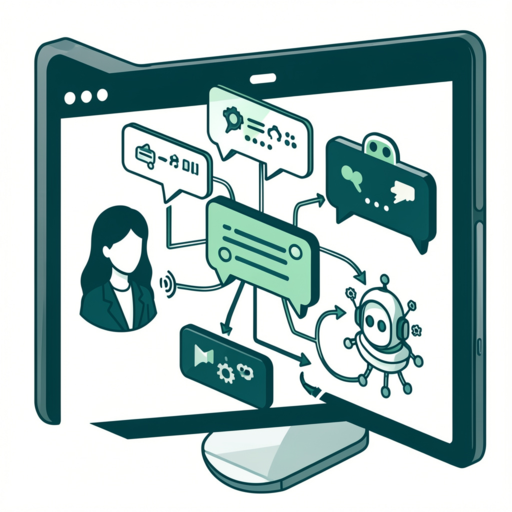
Interactions Best Suited for AI Chatbots
Information Retrieval
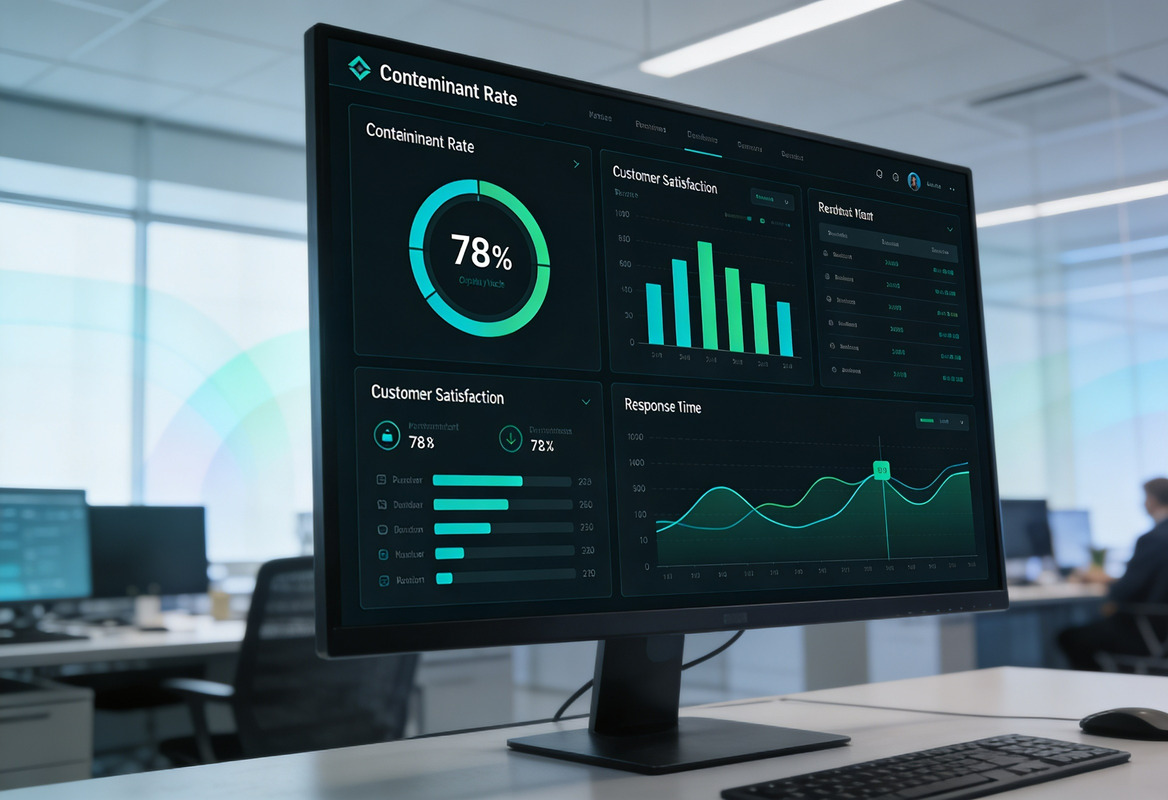
Measuring Chatbot Performance Containment and CSAT .
Questions with single, factual answers drawn from structured data sources are ideal chatbot territory. Account balance inquiries, order status checks, store hours, return policy details, pricing information, appointment availability, and product specifications all follow a simple pattern: the customer asks a question, the system retrieves the data, and the response delivers the answer. No judgment, no emotional navigation, no ambiguity. These interactions represent 40 to 60 percent of all customer inquiries in most businesses, making them the highest-volume automation opportunity.
Transactional Operations
Simple transactions that follow predictable workflows - scheduling appointments, updating account information, processing standard returns, making payments, renewing subscriptions - are well-suited for AI handling. The key qualifier is "standard" - transactions that follow the normal path without exceptions or complications. The chatbot collects required information through a structured slot-filling sequence, executes the transaction through API integration with the relevant business system, and confirms completion. These interactions require system access but not human judgment.
Guided Troubleshooting
Technical issues with documented resolution paths - device setup, password resets, connectivity troubleshooting, software configuration - can be automated through decision-tree conversation flows. The chatbot asks diagnostic questions, follows conditional branching based on the responses, and delivers step-by-step resolution instructions. The complexity ceiling for chatbot troubleshooting is approximately 5 to 7 decision branches deep. Issues requiring more branches typically indicate complexity that benefits from human diagnostic reasoning.
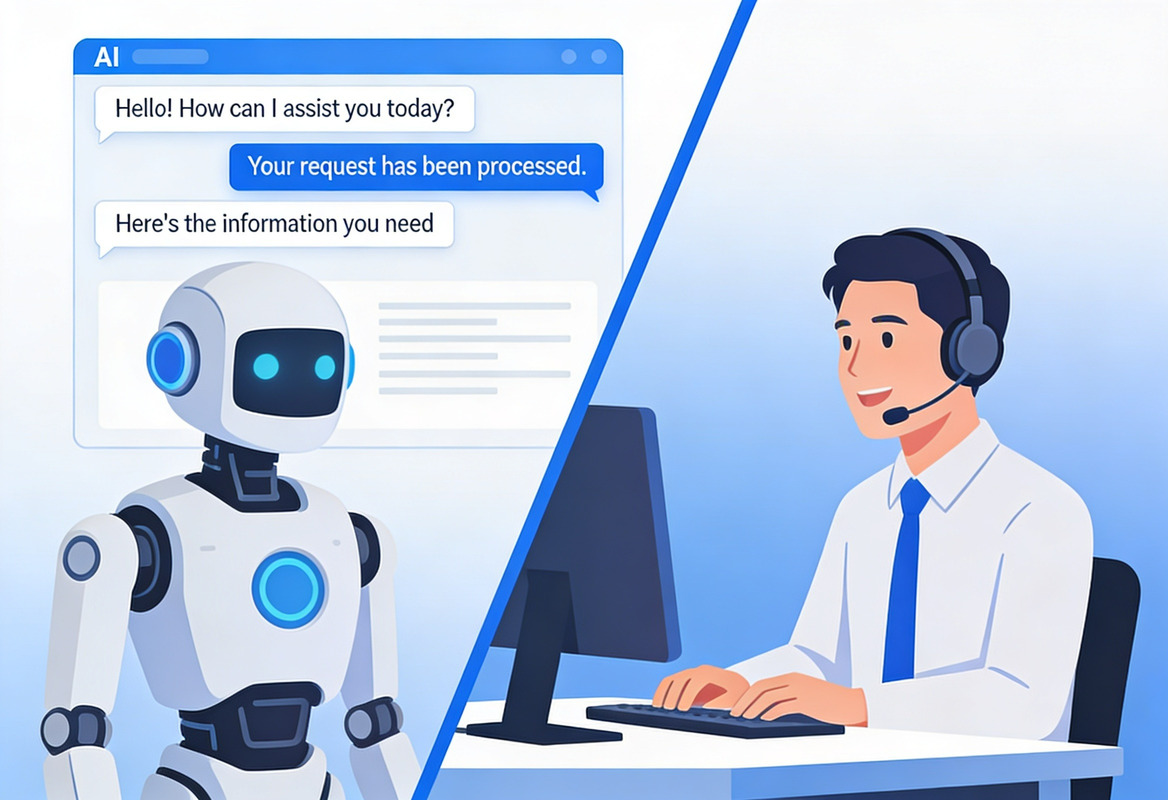
Interactions That Require Human Agents
Complex Problem Resolution
Issues involving multiple interconnected factors, unusual circumstances, or exceptions that fall outside standard resolution paths require human diagnostic capability. A billing dispute where the customer was charged for a service they believe they cancelled, but the cancellation was processed incorrectly due to a system migration, involving a promotional rate that expired during the billing cycle - this level of complexity exceeds what current AI can reliably parse and resolve. The agent needs to investigate across multiple systems, apply judgment about appropriate resolution, and potentially authorize exceptions outside standard policy.
Emotionally Charged Interactions
Customers experiencing frustration, anger, anxiety, or distress need human empathy that AI cannot authentically replicate. A customer whose wedding venue cancelled their reservation two weeks before the event needs more than a refund process - they need someone who understands the emotional weight of the situation and communicates with appropriate care. Complaints, service failures, safety concerns, and any situation where the customer's emotional state is elevated beyond routine dissatisfaction should route to human agents immediately.
High-Value Relationship Interactions
Interactions with strategic accounts, enterprise clients, or high-lifetime-value customers where the relationship itself is a business asset should involve human agents regardless of the technical complexity of the issue. The cost of a mishandled AI interaction with a customer generating $50,000 in annual revenue far exceeds the cost of human agent time. These customers expect personalized attention, and routing them through automated systems signals that the business does not value the relationship sufficiently to provide human engagement.
Negotiations and Escalations
Any interaction requiring negotiation - pricing adjustments, contract modifications, service level discussions, retention offers - requires human judgment about business trade-offs that AI is not authorized to make. Similarly, escalated interactions where the customer has explicitly requested a human agent should transfer immediately. Forcing a customer who has asked to speak with a person through additional AI interactions is one of the fastest ways to destroy customer trust and generate negative reviews.
The Hybrid Model: AI Triage with Human Resolution
The most effective deployment model does not draw a hard line between "AI interactions" and "human interactions." Instead, it uses AI as the first contact layer that triages every inbound interaction: identifying the intent, assessing complexity and emotional signals, gathering preliminary information, and routing to the appropriate resolution path - AI for simple interactions, human for complex or sensitive ones.
The triage model ensures that human agents receive pre-qualified interactions with context already gathered. The customer does not repeat their account number, order number, or problem description to the human agent because the AI captured and transferred this information during the triage phase. Agent handling time decreases because the preparation work is already done, and customer satisfaction increases because they are not asked to re-explain their situation after being transferred.
Triage Routing Decision Framework
| Signal | Route to AI | Route to Human |
|---|---|---|
| Intent clarity | Clear, single intent identified | Ambiguous or multiple intents |
| Emotional tone | Neutral or positive | Frustrated, angry, anxious |
| Resolution path | Standard, documented procedure | Exception, requires judgment |
| Customer value | Standard account | Enterprise/VIP account |
| Customer request | No agent preference stated | "Let me speak to a person" |
Frequently Asked Questions
What percentage of interactions should AI handle versus humans?
Industry benchmarks for well-implemented AI support range from 60 to 85 percent AI containment, with the remaining 15 to 40 percent handled by human agents. The exact ratio depends on your industry complexity, customer expectations, and the breadth of your AI's trained capabilities. Start conservatively - target 50 to 60 percent AI containment initially - and expand as the system demonstrates reliable resolution quality on its assigned interaction types.
How do I measure whether the AI-human split is working correctly?
Track three metrics. CSAT scores by resolution channel - AI-handled interactions should score within 10 percent of human-handled interactions on satisfaction surveys. Escalation accuracy - when AI escalates to humans, was the escalation genuinely necessary (the issue was too complex for AI) or unnecessary (the AI could have resolved it but failed due to a design gap). And resolution completeness - are AI-resolved interactions actually resolved, or do customers contact again about the same issue within 48 hours.